
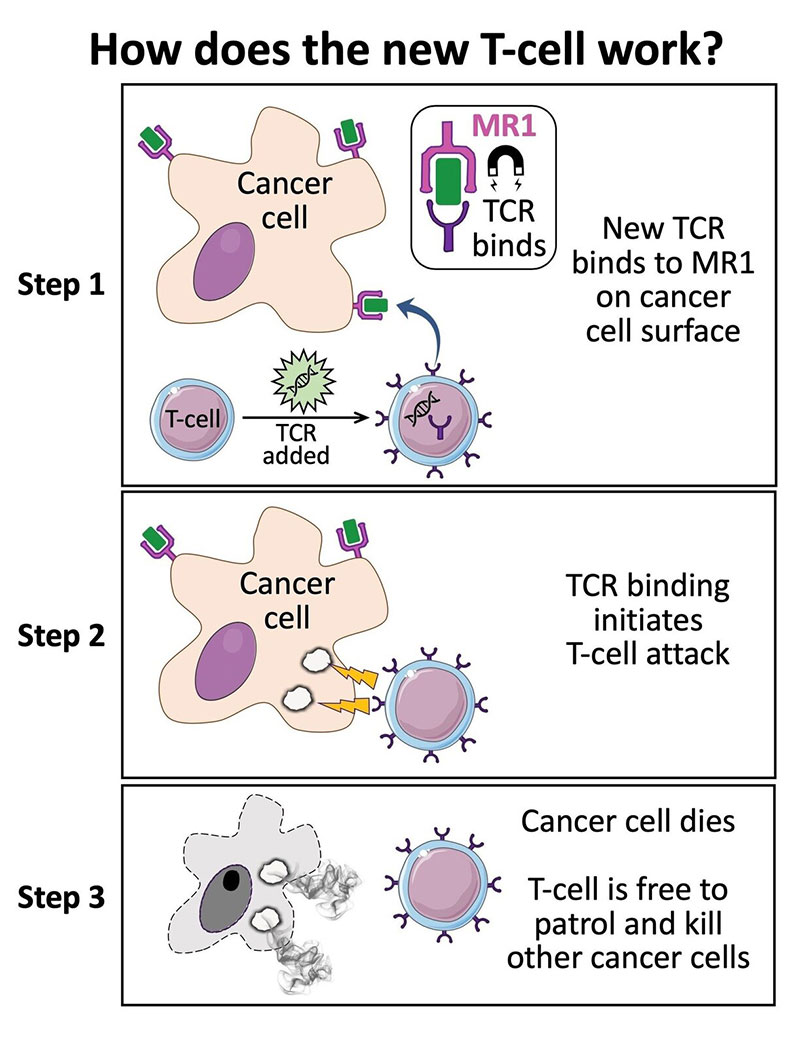
The researchers at Cardiff University's School of Medicine, the UK have accidentally discovered a new type of immune cell (T- cell) that kills most cancers, marking a breakthrough in cancer treatment. The findings of the study are published in the journal Nature Immunology on 20th Jan The accidental discovery was made when the scientists were analyzing blood samples for immune cells that could fight bacteria. They instead discovered the T-cell, a never-before-seen receptor that only latches on to cancerous cells, ignoring healthy ones.
Most of the patients with cancer are being treated with surgery, chemo and radiotherapy - with all their side effects - in an attempt to beat the malignant tumours. The quest for new approaches to combat cancer has led to the developments of new treatment tools. During the last decade, the researchers have made significant strides towards harnessing the immune system to fight against diseases. Immunotherapy (IT), also called biologic therapy, is a type of cancer treatment that boosts the body's natural defenses to prevent, control, and eliminate cancer.
It uses substances made by the body or in a laboratory to improve or restore immune system function. Immunotherpy has now emerged as a key tool in the management of several cancers.
The newly discovered T-cell and its receptor (TCR) could find and kill a wide range of cancerous cells in the lab including lung, skin, blood, colon, breast, bone, prostate, ovarian, kidney and cervical cancer cells while not touching the healthy normal cells. .So the risk for side effects is low compared to chemo or radiotherapy.
It raises the prospect of a universal cancer therapy; a single type of T cell that could be capable of destroying many different types of cancers across the population.
Though the discovery is still young, it serves as a stepping stone for other researchers to build on the new approach to study it further. This research represents a new way of targeting cancer cells that is really quite exciting, although much more research is needed to understand precisely how it works.
The ability to rewire our own immune system to fight cancer has certainly created huge expectations in oncology.